
Imagine a fat-loss solution that doesn’t rely on dieting, intense workouts, or hormone manipulation, a compound that directly targets the very blood vessels feeding your fat cells. That’s exactly what Adipotide promises in the world of experimental peptides. Developed through cutting-edge research, this peptide has captured attention for its unique vascular-targeting mechanism, showing remarkable fat-reduction results in preclinical studies and opening new possibilities in obesity research.
In this article, we’ll explore what Adipotide peptide research is, how it works, its benefits, safety profile, and how it compares to other popular fat-loss peptides. By the end, you’ll have a clear understanding of this innovative but experimental compound, its potential advantages, and the precautions you need to know before considering it in the context of fat-loss research!
Key Takeaways
- Adipotide is a cutting-edge fat-loss peptide that targets blood vessels feeding fat cells for direct reduction.

- Preclinical studies show significant fat loss and improved insulin sensitivity in obese animal models.

- Unlike most peptides, Adipotide works through a vascular mechanism, not hormonal or metabolic pathways.

- Safety in humans is unverified, and Adipotide remains experimental with no FDA approval.

- Adipotide represents a novel approach in obesity research, highlighting the future potential of vascular-targeted fat-loss therapies.

What is Adipotide?
Adipotide, also known as FTPP (Fat-Targeted Proapoptotic Peptide), is a synthetic research peptide developed to target and reduce body fat by acting directly on the blood vessels that nourish fat cells. Unlike traditional fat burners that rely on stimulating metabolism or appetite suppression, Adipotide works through a vascular mechanism, cutting off the blood supply to fat tissue, ultimately leading to its breakdown and removal from the body.
Originally developed by researchers at the MD Anderson Cancer Center and Barshop Institute for Longevity and Aging Studies, Adipotide was designed to explore a novel way of inducing fat loss without altering hormonal or metabolic pathways. Its structure combines two functional peptide sequences:
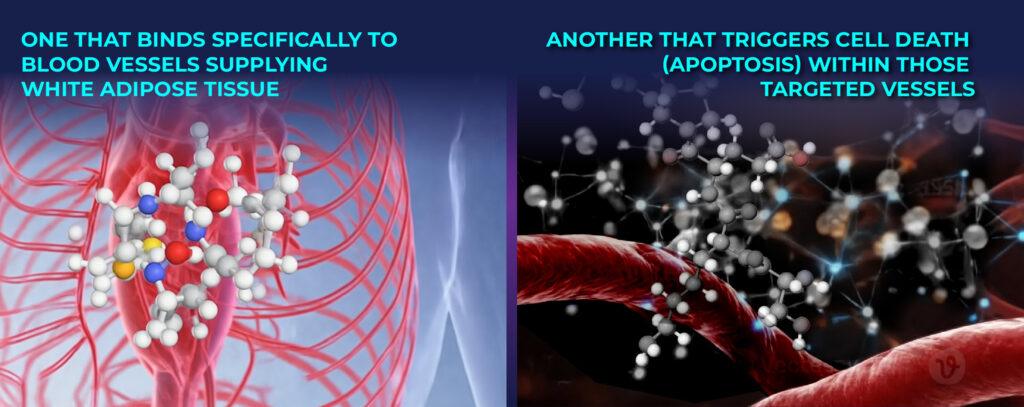
- One that binds specifically to blood vessels supplying white adipose tissue, and
- Another that triggers cell death (apoptosis) within those targeted vessels.
As these fat-feeding blood vessels are destroyed, adipose tissue begins to shrink, and the body naturally metabolizes the dead cells. Early preclinical studies on rhesus monkeys showed promising results, with significant reductions in body fat and improved insulin sensitivity observed after several weeks of treatment. However, these findings remain limited to animal studies, and Adipotide is not approved for human use by the FDA or any major health authority.
Today, Adipotide remains a research compound, studied for its potential in obesity management and metabolic health, but it should not be used outside controlled laboratory research. Despite its experimental status, the peptide has drawn considerable attention in the fitness and biohacking communities due to its unique fat-targeting approach — one that stands apart from conventional weight-loss methods.
How Adipotide Works: Mechanism of Action
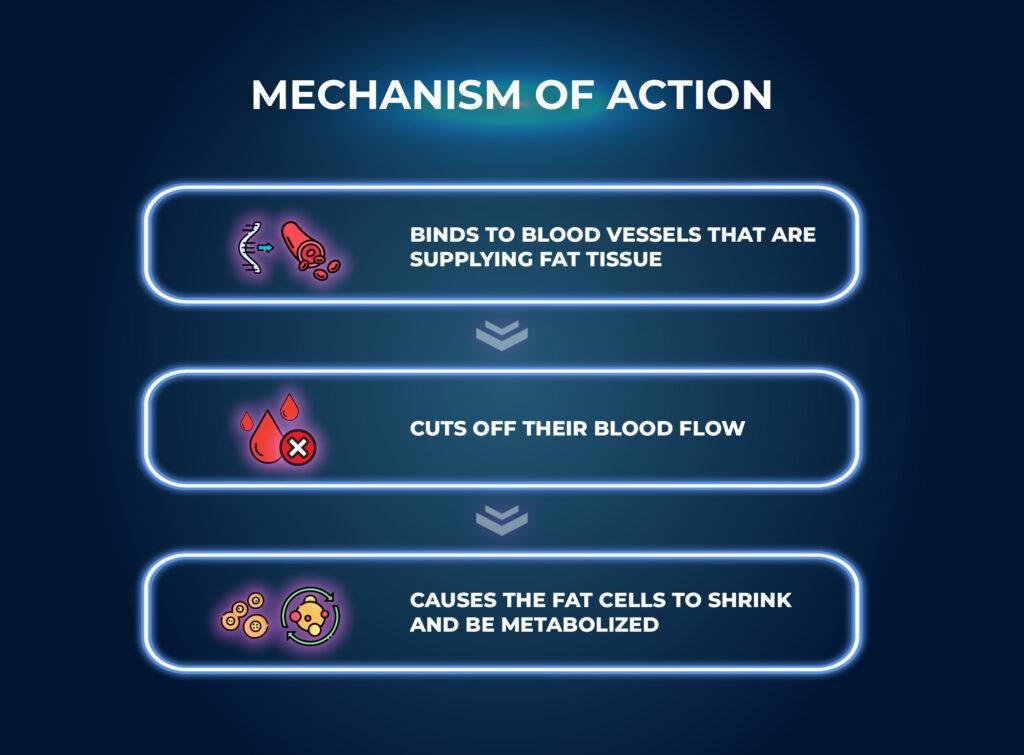
Adipotide stands out for its unique mechanism of action from traditional fat-loss methods. Instead of influencing hormones, metabolism, or appetite, this peptide works by starving fat cells of their blood supply, a process that directly leads to fat tissue reduction.
At the molecular level, Adipotide is composed of two main peptide sequences:
- A targeting sequence (CKGGRAKDC) that specifically binds to receptors found on the blood vessels supplying white adipose tissue (the type of fat responsible for energy storage and stubborn fat deposits).
- A pro-apoptotic sequence ((D)(KLAKLAK)₂) that triggers cell death (apoptosis) once the peptide has attached to these vessels.
Once Adipotide binds to the vasculature surrounding fat cells, it delivers a signal that triggers apoptosis. As the blood supply to adipose tissue is disrupted, the fat cells are deprived of oxygen and nutrients. This leads to their gradual breakdown and clearance by the body’s natural metabolic processes.
In simpler terms, Adipotide acts like a precision-guided missile for fat tissue; it doesn’t raise heart rate or alter metabolism but instead targets the infrastructure that keeps fat cells alive. Once those blood vessels collapse, the associated fat deposits begin to shrink.
| AP | 2 mg x 10 vails, 10 mg x 10 vails |
|---|
Be the first to review “Adipotide(FTPP) Spec.(10vials/box)”
Related products

Peptides


Peptides


Peptides
Reviews
There are no reviews yet.